
REVIEW · WEST QATAR TOURS
From Doha: Day Trip to North And West Qatar With Pickup
Qatar gets far more interesting outside Doha. This eight-hour 4WD day trip links mangroves, abandoned villages, a UNESCO World Heritage Site, desert rock formations, modern art, and a camel racetrack in one long but rewarding outing. It is a useful way to see the country’s older coastal character and stark western scenery without arranging several separate excursions.
I especially like the variety. Al Zubara Fort gives the day historical weight, while Richard Serra’s enormous desert sculptures and the umbrella-shaped rock bring a completely different mood. The main drawback is the amount of time spent on the road. You cover a large stretch of Qatar, so this is not a slow village walk or a relaxed beach day.
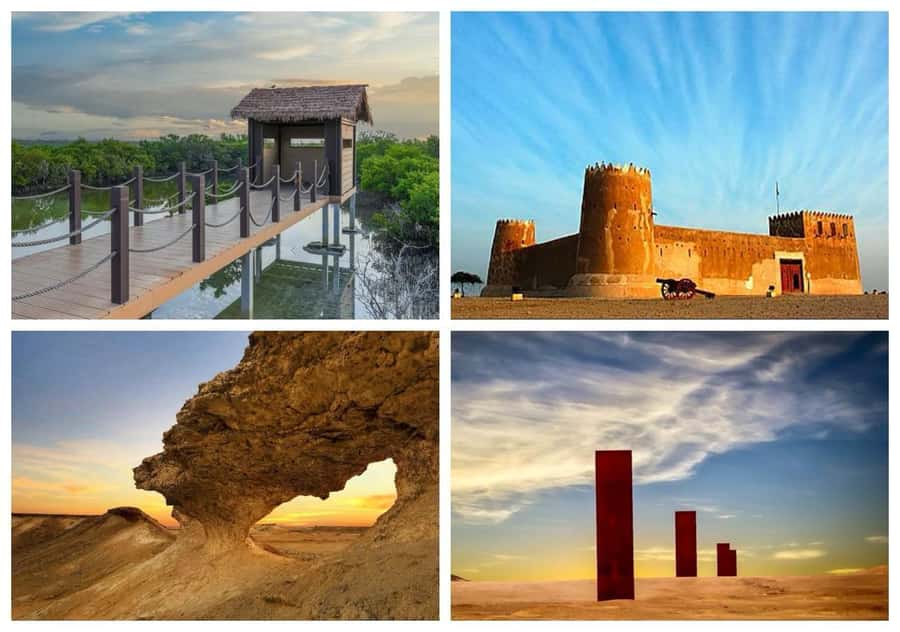
- Purple Island and Al Thakira bring mangroves and coastal scenery to the opening part of the day.
- Al Zubara Fort offers one of Qatar’s key heritage sites and a glimpse into the country’s former trading world.
- Jumail’s abandoned village adds atmosphere, with old limestone and mud homes gradually giving way to the desert.
- Zekreet Peninsula is the dramatic outdoor section, with unusual limestone formations, a wildlife reserve, and the umbrella-shaped rock.
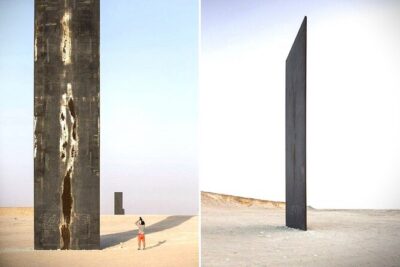
- Richard Serra’s East-West/West-East turns the desert into an open-air art gallery.
- Pickup, water, tea, and air-conditioned 4WD transport make the long route easier to manage.
In This Review
- Why this day trip works beyond Doha
- Pickup from Doha and the long road north
- Purple Island and the Al Thakira mangroves
- Al Zubara Fort and Qatar’s archaeological past
- Jumail, an abandoned village by the coast
- Al Shamal and the northern edge of Qatar
- Zekreet Peninsula, wildlife, and unusual rock shapes
- Richard Serra’s East-West/West-East in the desert
- The final stop near Al-Shahaniya
- What the guide adds to the experience
- How much driving should you expect?
- Who should book this $71 excursion?
- What to bring for a better day
- Should you book this North and West Qatar tour?
- FAQ
- How long is the tour?
- Where does pickup take place?
- What transport is used?
- Is the tour conducted in English?
- Is lunch included?
- Are drinks provided?
- Which heritage site does the tour visit?
- Does the tour visit Richard Serra’s artwork?
- Can I join as part of a private group?
- What should I bring?
Why this day trip works beyond Doha
Doha is polished, modern, and full of museums, towers, and carefully planned public spaces. This tour shows you a less tidy and more revealing side of Qatar. You move through former fishing areas, old settlements, archaeological ground, open desert, and remote coastal territory.
That mix matters. If you only have time for one day outside the capital, you get several different versions of the country rather than one attraction repeated in different forms. The day connects Qatar’s past, its natural setting, and its newer art projects in a way that makes the long drives worthwhile.
The tour costs $71 per person. I consider that fair for an eight-hour outing with pickup from Doha, a 4WD vehicle, a live English-speaking guide, bottled water, tea or coffee, and insurance. Lunch and snacks are not included, so you should budget for those separately.
The value is strongest if you do not have a rental car or do not want to navigate remote roads yourself. You are paying for transport, route planning, site knowledge, and the ability to reach places spread across northern and western Qatar in a single day.
Pickup from Doha and the long road north
The tour begins with pickup in Doha, including hotels and the airport. The first transfer is listed at about 35 minutes, then later drives range from 10 to 45 minutes. That tells you something important: this is a road trip with sightseeing stops, not a compact city excursion.
The air-conditioned vehicle is a real advantage. Qatar’s sun can be intense, and the open desert offers little shade. The 4WD format also suits the western section, where the route reaches remote desert and rocky ground.
Group arrangements are available, with a private group option for those who want a more personal setup. The exact feel of the day depends on the group size, but several bookings have been described as small groups of four. That can make a big difference when you want time for photographs or need to ask questions.
Guides named in the feedback include Abood, Abdullah, Adnan, Hassan, Abdul Rehman, Salman Khan, Adil, Ahmad Aurangzeb, and others. The praise is consistent across these guides: punctual pickup, clear explanations, safe driving, help with photographs, and attention to the group’s comfort. Since the assigned guide can vary, treat those names as examples rather than a promise of who you will receive.
More of the west coast — Zekreet, the sculptures, the rock formations:
- Qatar West Coast tour to Richard Serra Sculpture and Mushroom Rock Formation
★ 5.0 · 153 reviews - Qatar West Coast tour, Zekreet, Richard Serra Sculpture, Mushroom Rock Formation
★ 5.0 · 150 reviews - Doha: West Coast Qatar Tour, Sculptures, Camel Racing track
★ 5.0 · 111 reviews
Purple Island and the Al Thakira mangroves
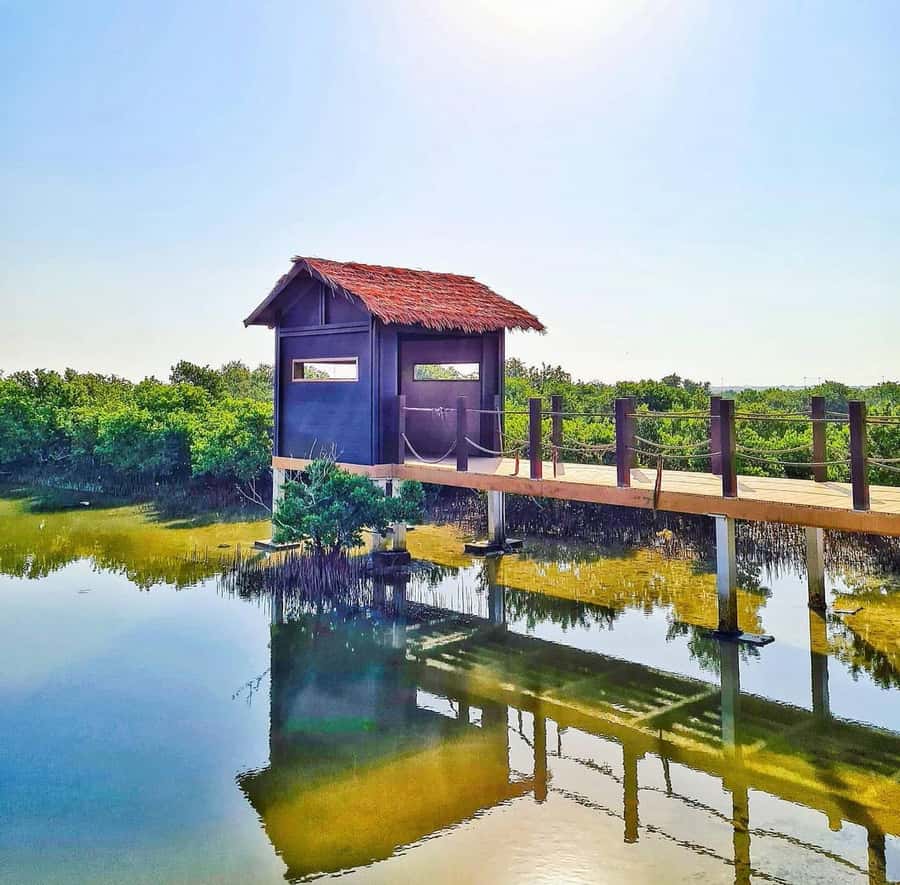
Purple Island is the first major stop on the listed route. The visit combines a photo stop, a guided walk, and views across the coastal setting. Nearby Al Thakira is associated with mangroves, which offer a surprising contrast to Qatar’s dry interior.
This is a good opening stop because it gives you a softer view of the country. Instead of sand and bare rock, you see shallow coastal water and plant life adapted to salty conditions. The setting also helps explain why northern Qatar supported fishing and coastal communities long before the era of skyscrapers and gas wealth.
You should bring sunglasses and a camera. The light can be strong, but it also creates clean colors and sharp reflections. The information describes the stop as suitable for scenic views and photography, not as a full water activity, so do not book this expecting kayaking or a boat trip.
The main limitation is timing. The overall day includes many stops, so your walk around the mangroves may be guided and reasonably brief rather than an open-ended nature outing. Still, it gives the tour welcome variety before the historical sites.
Al Zubara Fort and Qatar’s archaeological past
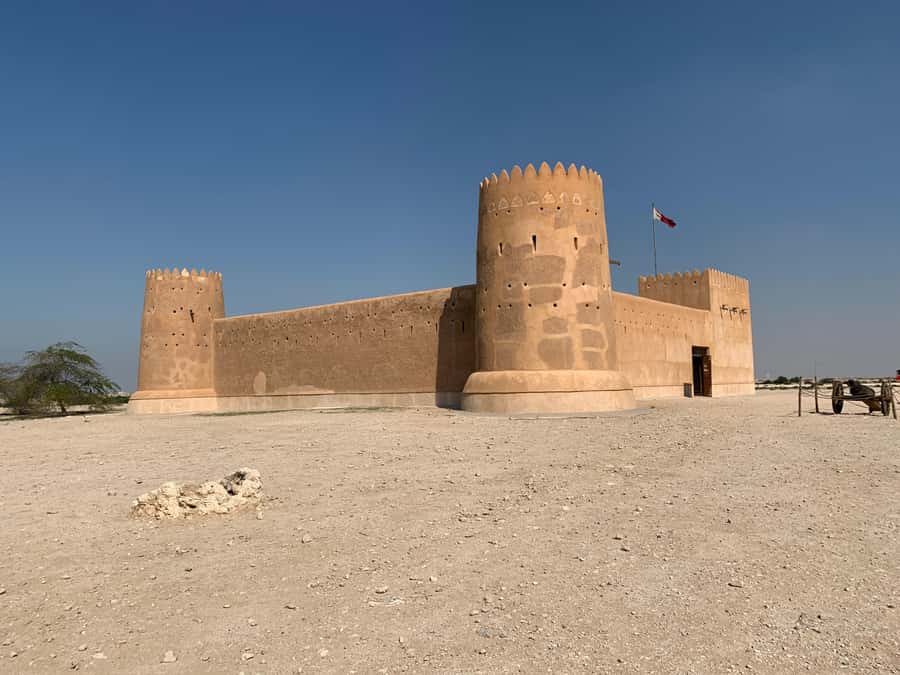
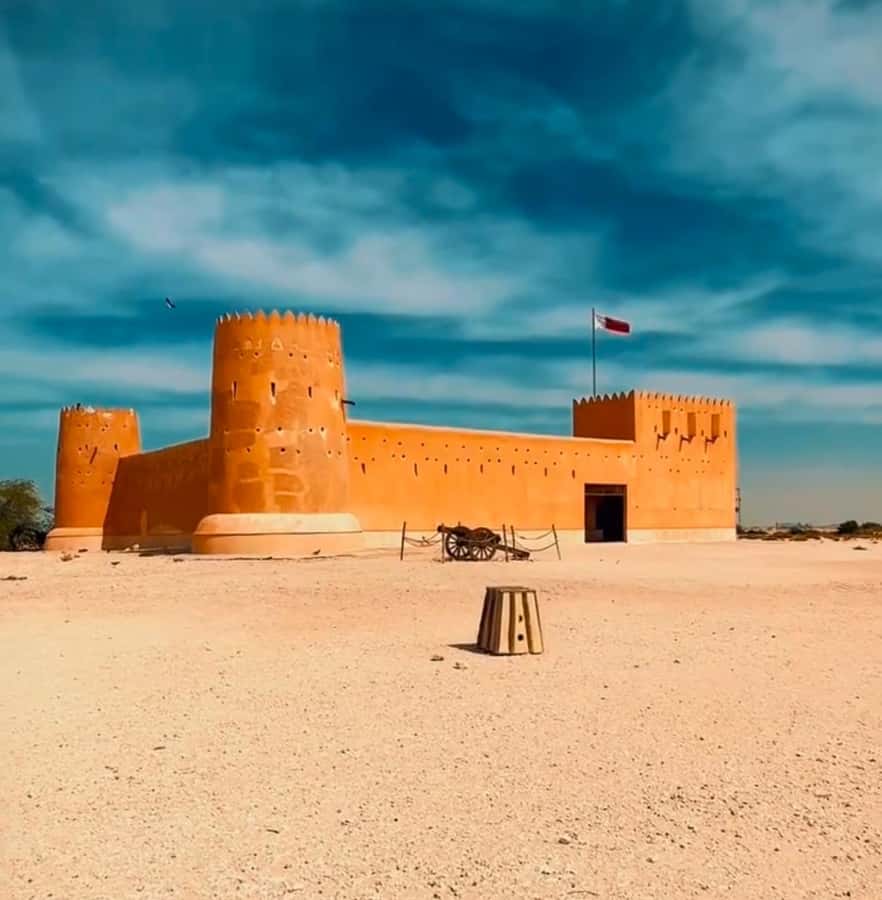
Al Zubara Fort is the day’s most important heritage stop. The fort is part of the UNESCO-listed Al Zubara archaeological area, recognized for its remains and wider archaeological setting. The visit includes a guided tour, sightseeing, walking, and time for photographs.
The fort itself is easier to appreciate when you connect it to the surrounding site. This is not simply a photogenic building placed in empty terrain. The area reflects Qatar’s former coastal economy, shaped by fishing, trade, and pearl gathering. A good guide can help you read the bare ground and old walls as part of a larger settlement rather than as an isolated fort.
That guide commentary is one of the experience’s strongest features. Multiple visitors praised guides for explaining Qatari history and culture in clear, accessible terms. I would pay close attention here, since the desert setting can make the remains seem sparse if you do not know what you are looking at.
The stop should suit history fans, photographers, and first-time visitors who want some context for Qatar beyond Doha. It may disappoint anyone expecting a large, furnished castle. The appeal is archaeological and historical, not lavish interiors.
Jumail, an abandoned village by the coast
The next stop is Jumail Abandoned Village, reached after a short transfer of about 10 minutes from Al Zubara Fort. This is one of the more atmospheric parts of the route.
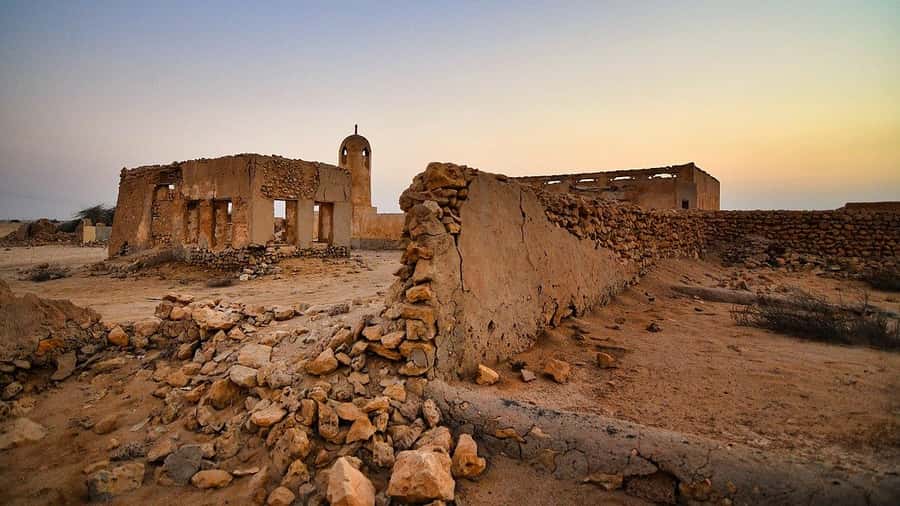
Jumail’s old homes were built with limestone and mud, traditional materials that fit the local climate and available resources. Their worn condition gives you a direct sense of how quickly a settlement can fade when people move elsewhere. The remains are not presented as a polished museum, which is exactly what makes the stop interesting.
You can walk, take photographs, and hear more about village life from the guide. The rough walls and empty rooms make a useful contrast with the formal fort nearby. Al Zubara represents a major historical site, while Jumail feels personal and domestic.
Be respectful around the ruins. The information provided does not promise entry into every structure, and conditions can vary. I would treat this as a stop for viewing and photography rather than an extended archaeological exploration.
Not quite what you had in mind? These cover the same ground differently:
- Doha: Safari, ATV, Camels, Sandboarding and Inland Sea Tour
★ 4.8 · 5,291 reviews - Doha: ATV, Quad/Buggy Dune Bashing, Camel Ride, Sandboarding
★ 5.0 · 3,784 reviews - Desert safari, Dune bashing, sandboarding, camel, ATV Option
★ 5.0 · 2,826 reviews - Qatar Gold Dune Safari, Dune Bashing,Camel Ride,Sand Boarding,Inland Sea Desert
★ 5.0 · 2,807 reviews
Al Shamal and the northern edge of Qatar
The wider route continues toward Al Shamal, the northern part of Qatar. On clear days, you may be able to see Bahrain from this area. That detail depends on visibility, so it should be treated as a possible bonus rather than a guaranteed view.
This section helps explain the scale of the excursion. You are not just taking a short trip to one attraction outside Doha. You are crossing a large portion of the peninsula, moving from coastal settlements and mangroves toward the country’s northern edge before heading west.
The route description also refers to Al Khor harbor, historically linked with pearl gathering and fishing, and Al Thakira. The precise order of these northern stops may vary from the listed sequence, so I would confirm the day’s running order with your guide at pickup. The broader theme remains clear: you are seeing places tied to Qatar’s maritime past, not just its modern capital.
Zekreet Peninsula, wildlife, and unusual rock shapes
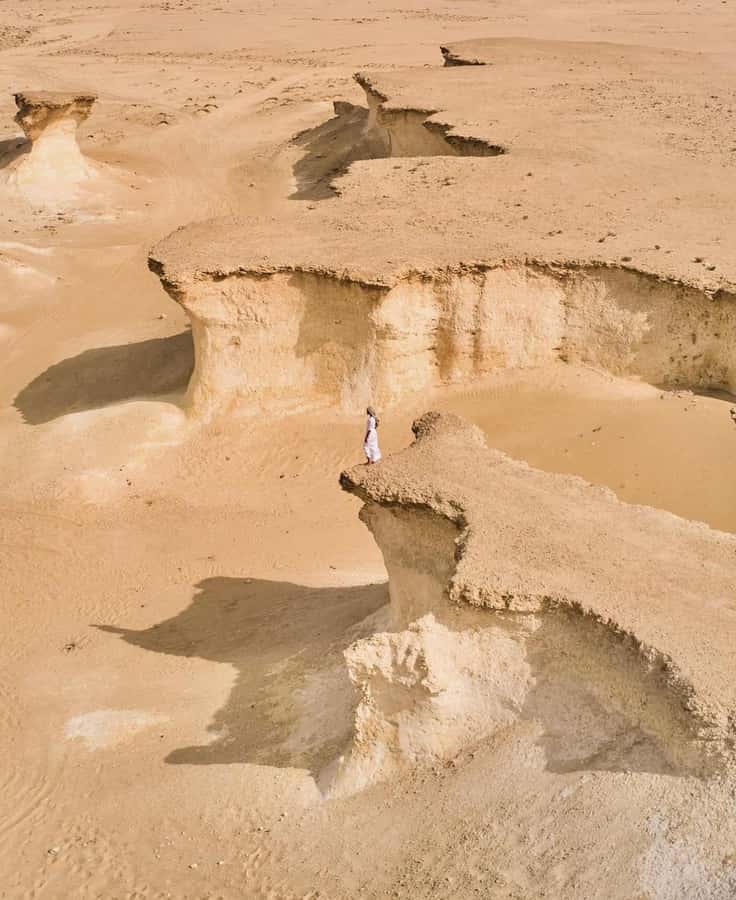
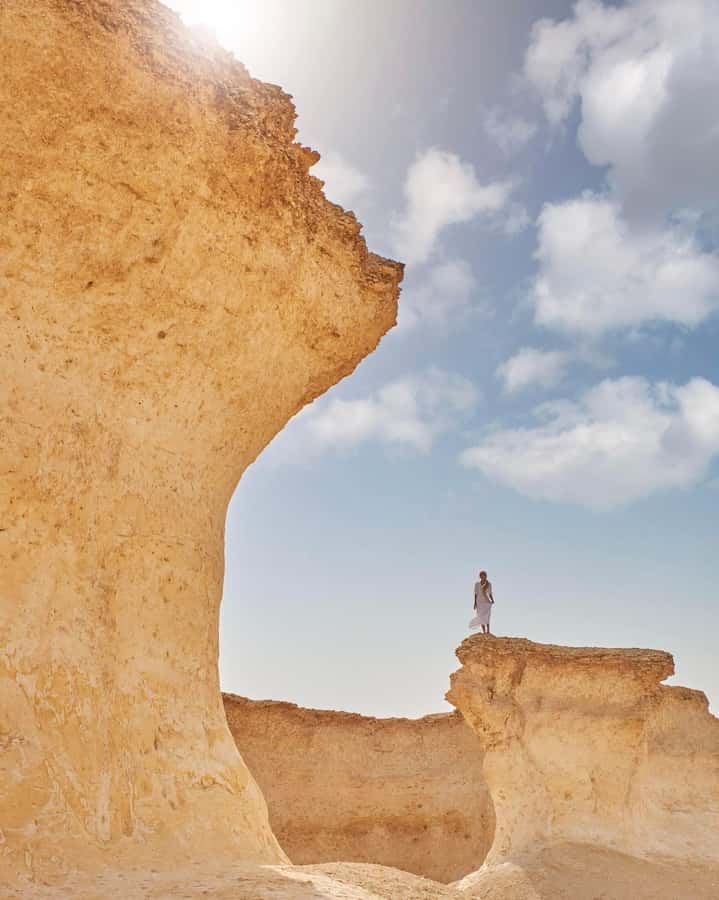
After the northern stops, the tour heads west toward the Zekreet Peninsula. This is where the scenery becomes more rugged and visually strange. The area is known for pale limestone formations, open desert, and a wildlife reserve.
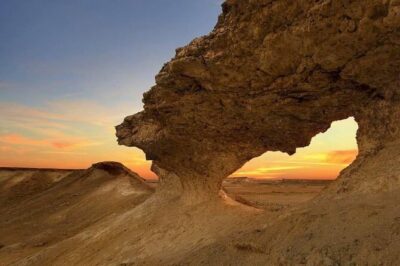
The rock formations are a major reason to choose this excursion. Wind and time have shaped the soft limestone into forms that look almost designed. One famous formation resembles an umbrella and has become a favorite photography subject. The shape is memorable, but the wider setting matters just as much: low rock, broad sky, and very little built development.
The itinerary includes photo stops, walking, guided sightseeing, and scenic views. Wear shoes suitable for uneven ground, although the only stated packing advice specifically lists sunglasses and a camera. Bring sun protection as well, since much of the route is exposed.
The wildlife reserve adds another layer, but you should keep expectations sensible. The supplied details confirm the reserve as part of the Zekreet experience, not guaranteed animal sightings. You are visiting a protected natural area and unusual rock country, not taking a dedicated safari.
The western section may be the most enjoyable part for photographers. The shapes change with the angle of the sun, and the open setting gives you room for wide shots. It is also where the 4WD vehicle becomes most useful, since the route reaches remote desert areas that are awkward to combine with ordinary city transport.
Richard Serra’s East-West/West-East in the desert
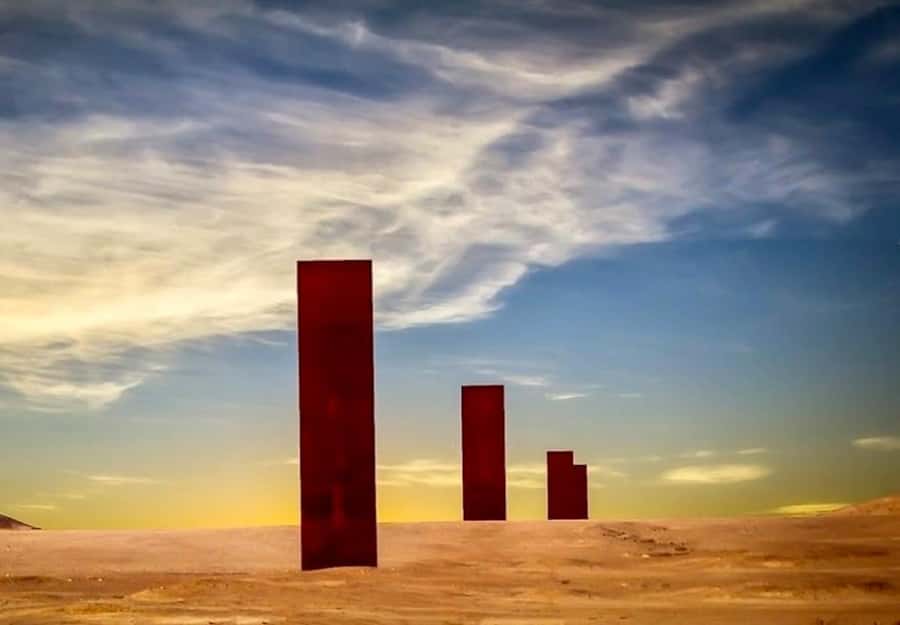
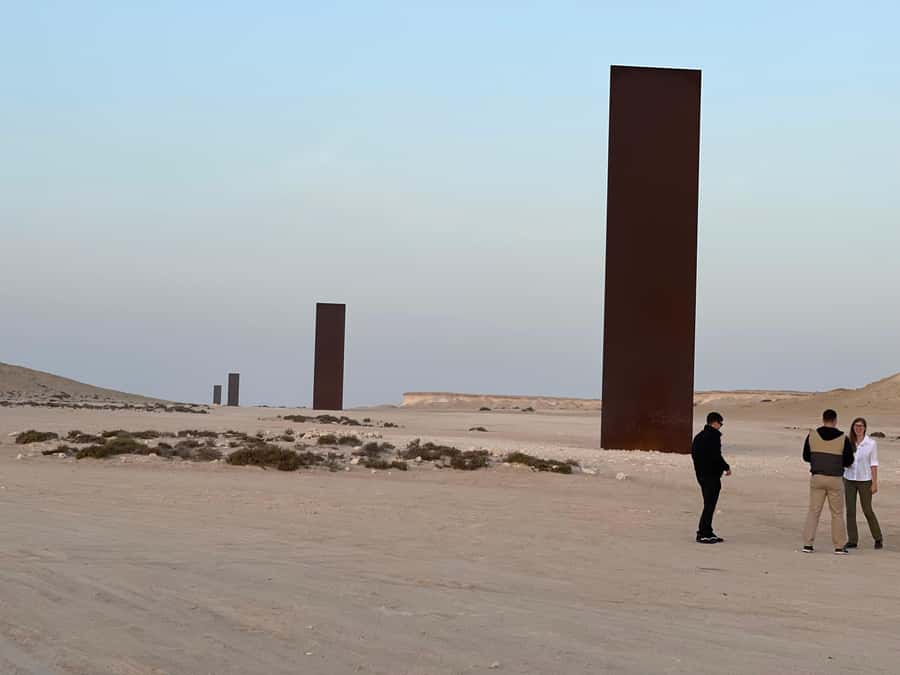
Richard Serra’s desert installation is the tour’s most unexpected stop. Four enormous steel plates stretch across the desert between rock formations, creating a stark line through an otherwise open setting.
The work is often listed as Richard Serra Desert or Richard Serra East-West. It is a powerful place even if you do not normally seek out modern art. The scale forces you to look at distance, silence, and the relationship between a human-made object and the surrounding desert.
Your guide can add useful context, but the site also works without a long explanation. Walk around the sculptures, change your viewpoint, and give the place a little time. The best photographs often show the tiny scale of people against the huge plates and open terrain.
This stop also helps explain why the tour is more than a standard heritage drive. You move from traditional homes and an old fort to a major contemporary artwork, yet both depend on the same remote setting. The contrast is one of the day’s best ideas.
The final stop near Al-Shahaniya
The route returns toward Al-Shahaniya Municipality before heading back to Doha. The listed schedule includes a photo and sightseeing stop here, and several accounts describe the camel racetrack at Ash Shahaniyah as the final attraction.
The camel-racing stop gives the day another distinctly Qatari note. It is different from the coastal ruins and the desert art, and it brings the journey back to a living cultural tradition rather than an abandoned one.
The precise amount of time here is not stated, so do not assume you will see a race in progress. The value is in seeing the setting and learning about an activity associated with the country. If this stop matters especially to you, ask the guide what will be possible on your date.
After this, the listed final transfer to Doha takes about 45 minutes. By then, you will have spent a full day in the vehicle and outdoors, so the return ride is useful downtime.
What the guide adds to the experience
The route is good, but the guide can make or break it. You need someone who can explain why an old village matters, identify the difference between a fort and an archaeological settlement, and give context to Serra’s installation without turning the day into a lecture.
The strongest feedback centers on guides who were friendly, punctual, calm, and willing to answer questions. Abood was praised for clear explanations and a professional manner. Abdullah was repeatedly described as attentive and well organized, while Adnan was noted for helping with photographs and giving people enough time at stops. Hassan and Salman Khan were also praised for their information and care.
There was one small warning about communication from the operator, with a request for clearer organization. That does not appear to outweigh the positive experience, but it is a reason to confirm pickup details and the meeting point before the day begins.
Water and tea or coffee are included. One group also stopped at a gas station where they bought snacks. Since lunch and snacks are not part of the package, carry money and plan ahead rather than relying on that stop.
How much driving should you expect?
A lot. The listed transfers total roughly two hours and 25 minutes, not counting the driving within each sightseeing area. Since the tour lasts eight hours, a sizeable part of the day takes place on the road.
That is not necessarily a flaw. Qatar’s northern and western sites are spread out, and the driving is the price of seeing them together. The vehicle is air-conditioned, and the changing scenery gives you something to watch between stops.
Still, this tour is not ideal if you dislike long drives or need frequent breaks. It is also not the best choice if your main goal is to spend several hours at one site. You choose breadth here: many sights, several types of scenery, and a single organized day.
Who should book this $71 excursion?
I would recommend it most strongly to first-time visitors, people on a short Doha stay, and cruise passengers with one free day. One booking specifically described it as a practical way to see Qatar beyond the capital during a cruise stop.
It also suits couples, families, and small groups who want photographs, history, and outdoor scenery in one package. The private group option may be worth considering if you want more control over the pace or have specific interest in photography.
You should think twice if you want a relaxed schedule, a dedicated mangrove activity, or a full lunch included. The route is packed, the western terrain is exposed, and the day can feel long in hot weather.
Free cancellation up to 24 hours before departure and reserve-now, pay-later terms make the $71 commitment easier to manage. Pickup is available from hotels and the airport, and the tour is conducted in English. Pets are not allowed.
What to bring for a better day
The official advice lists sunglasses and a camera, both sensible choices. I would also bring comfortable walking shoes and sun protection because several stops involve outdoor walking in open country.
Pack snacks or be ready to buy them during the day. Bottled water and tea or coffee are supplied, but lunch is not.
Keep your phone charged. The day offers many photo stops, from mangroves and old homes to rock shapes and Serra’s steel plates. The light and open views are a major part of the appeal.
Should you book this North and West Qatar tour?
Book it if you want a broad, efficient look at Qatar beyond Doha and do not mind a long day in the vehicle. For $71, the combination of 4WD transport, pickup, guide service, water, tea, insurance, and access to remote sites is strong value.
The best reason to go is the range: mangroves in the morning, archaeology and old village walls in the middle of the day, then wild rock country and monumental art in the west. The main caution is simple: expect roads, heat, and a full schedule.
If that sounds like a good trade, this is one of the more useful day trips for seeing the country’s older and more remote character.
FAQ
How long is the tour?
The experience lasts eight hours, including pickup from Doha, sightseeing, transfers, and the return journey.
Where does pickup take place?
Pickup is available from Doha hotels and the airport.
What transport is used?
The tour uses a 4WD vehicle with air conditioning.
Is the tour conducted in English?
Yes. The live tour guide language is English.
Is lunch included?
No. Lunch and snacks are not included in the price.
Are drinks provided?
Yes. Bottled water and coffee or tea are included.
Which heritage site does the tour visit?
The route includes Al Zubara Fort, part of the UNESCO-listed Al Zubara archaeological area.
Does the tour visit Richard Serra’s artwork?
Yes. The experience includes Richard Serra’s desert installation, also referred to as East-West/West-East.
Can I join as part of a private group?
Yes. A private group option is available.
What should I bring?
Bring sunglasses and a camera. Comfortable footwear and sun protection are also sensible for the outdoor stops.
Just added for Doha
- Doha: Night Desert Safari With Stargazing and Inland Sea★ 5.0 · 9 reviews
- From Doha: Private West Coast and Camel Race Track Tour★ 4.7 · 4 reviews
- Doha Delights City Tour with Desert Safari and Inland Sea Visit★ 5.0 · 5 reviews
- Doha Layover or Doha Stopover Tour with Desert & City Tour★ 5.0 · 3 reviews
- Private Wakesurfing or Wakeboarding along Doha’s skyline★ 5.0 · 3 reviews
- Doha-Private half day safari Sunrise/Sunset★ 5.0 · 6 reviews
- Private Dunes Bashing | Desert Safari | Sand Boarding★ 5.0 · 5 reviews
- West of Qatar Tour★ 5.0 · 2 reviews
West Qatar Tours, compared.
Qatar West Coast tour to Richard Serra Sculpture and Mushroom Rock Formation
Read our review →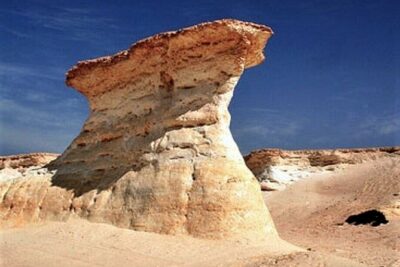
Qatar West Coast tour, Zekreet, Richard Serra Sculpture, Mushroom Rock Formation
Read our review →
West Qatar tour to Richard Sierra sculpture,Umbrella Rock
Read our review →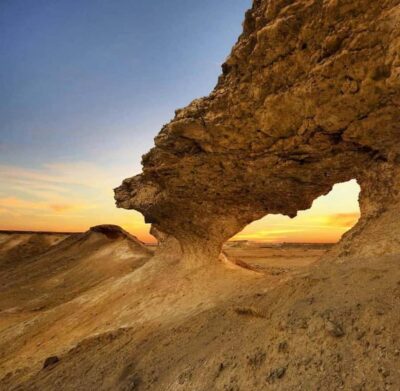
West Coast Qatar Tour, Sculptures, Camel Racing track
Read our review →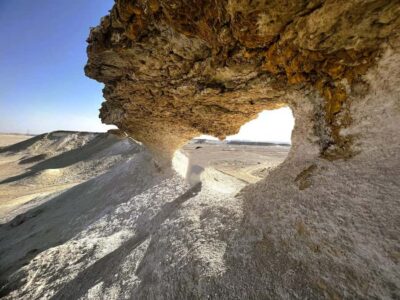
West Coast tour, Zekreet, Richard Serra Sculpture, Mushroom Rock Formation
Read our review →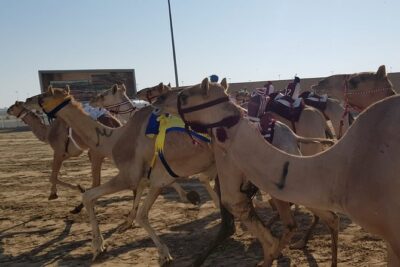
Half-Day Private Guided Camel Race Tour in Qatar
Read our review →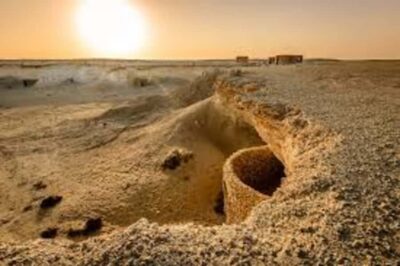
Explore Zekreet: Richard Serra Art & Mushroom Rock Wonders
Read our review →Browse the lists this tour appears in